Medical catheters, guide wires and other instruments have been widely used in interventional surgeries, nursing and other processes. Most of these devices are made of hydrophobic materials (polyvinyl chloride, polyurethane, silicone rubber, Pebax, etc.). When entering the human body, their surfaces are prone to friction with human tissues, causing damage to human blood vessels or other luminal tissues, causing adverse reactions and complications, and also causing many illnesses to patients. In addition, large friction resistance increases the difficulty of clinical operations for medical staff, affects the smooth progress of the operation, and may even lead to surgical failure. The traditional lubrication method involves applying lubricant (such as silicone oil, etc.), but this method has disadvantages such as the lubricant is easy to fall off, the lubrication effect is not sustainable, it is difficult to operate, and it can easily cause infection.
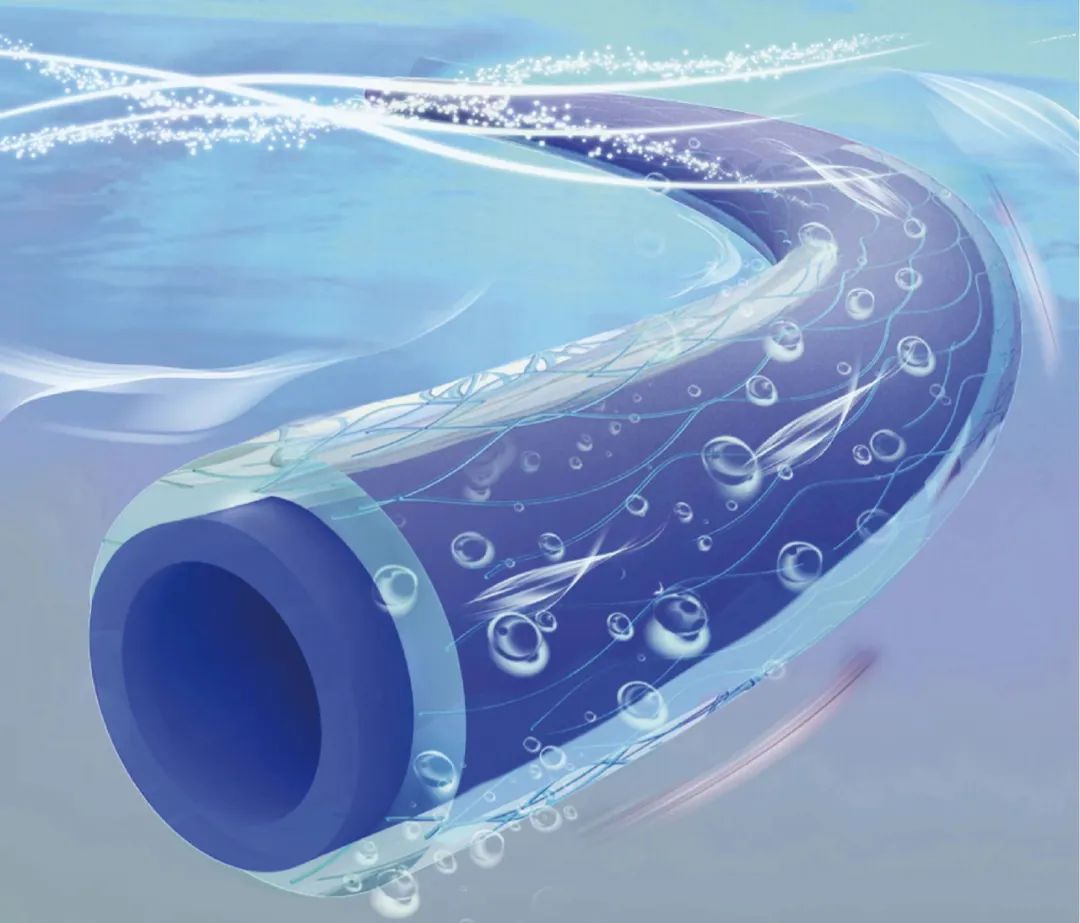
The application of hydrophilic lubricating coatings on the surface of instruments can well solve the problem of high friction resistance between the surface of the instrument and human tissue. Through specific coating processes (such as dipping, spraying) and curing processes (such as UV curing, thermal curing), biocompatible hydrophilic polymers (such as polyacrylamide, polyvinylpyrrolidone) are combined onto the surface of medical device products, and a polymer cross-linked network film is formed, which is a hydrophilic coating. This coating quickly combines with water to form a hydration layer (Figure 1), which makes the surface very lubricated, greatly reducing the friction between the instrument and human tissue. It also greatly improves the convenience of doctors' operation and the comfort of patients, and avoids possible friction injuries, infections and other complications.
Figure 1 Schematic diagram of hydrophilic lubricating coating on catheter surface
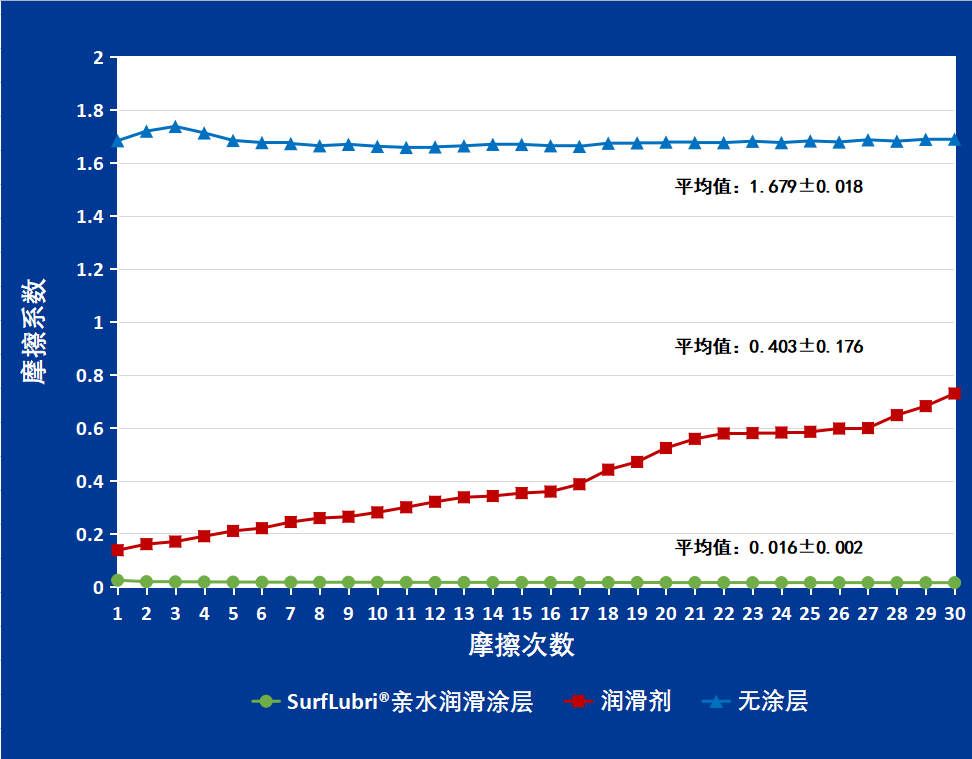
By reasonably matching the coating formula and coating process, a uniform and strong hydrophilic lubricating coating can be formed on the surfaces of different materials and types of interventional medical devices. Both safety and lubrication effect are far superior to traditional lubrication methods. (Figure 2) shows the test results of 30 times of friction on the catheter. The smaller the friction coefficient, the better the lubrication performance.
Figure 2 Friction performance of the same type of catheter with different lubrication methods
Note: The test was conducted on the Besaifei FW-01 fully automatic friction tester, and the clamping force was set to 3 N.
@The copyright of this work belongs to Bai Saifei. If you need to reprint it, please contact me.