

During use of vascular interventional devices with lubricating coatings, the coating may peel off or partially fall off if the coating is not firmly bonded to the catheter guidewire base material or if the coating is defective in the dry state. Therefore, coating integrity evaluation is an important prerequisite to ensure the safety and effectiveness of relevant coating products. This article describes the use of visual inspection in coating integrity evaluation.
The guideline states: 'Since immersion in environmental liquids and friction during use are the main factors that cause coatings to fall off, it is recommended to conduct simulation tests in a representative typical model and collect pre- and post-test data to evaluate the integrity of the coating. In addition to optical microscopy, the common evaluation method is to detect that the coating surface is uniform, smooth, free of bubbles, burrs, and no peeling. It is also advisable to evaluate the coating integrity through dyeing detection, microscopic observation and other methods. The microscopic image should be clear and can show defects on the coating surface. The transparent coating can be dyed after the simulation test to facilitate observation.'
Pre-processing optionsRecommended sample pre-treatment methods include: immersion treatment, friction test or blood vessel model simulation use, etc. Enterprises can choose one or more sample processing methods based on the experimental purpose and expected clinical use. All pre-treatment tests must pass a visual inspection to confirm the coating status of the sample surface. The surface should be clean, flat, and free of defects to avoid affecting the accuracy of the test.
Soaking treatment : The soaking temperature is generally 37°C. The soaking time can simulate clinical practice or conduct a challenge test. The challenge test time is usually not shorter than the clinical use time, or even longer.
Friction test model friction: Use the friction test model as shown in Figure 1, set a constant normal clamping force, and make the silicone sheet rub against the surface of the test sample multiple times under the test conditions of 37°C. Then conduct an appearance inspection of the coating area after the sample is rubbed.
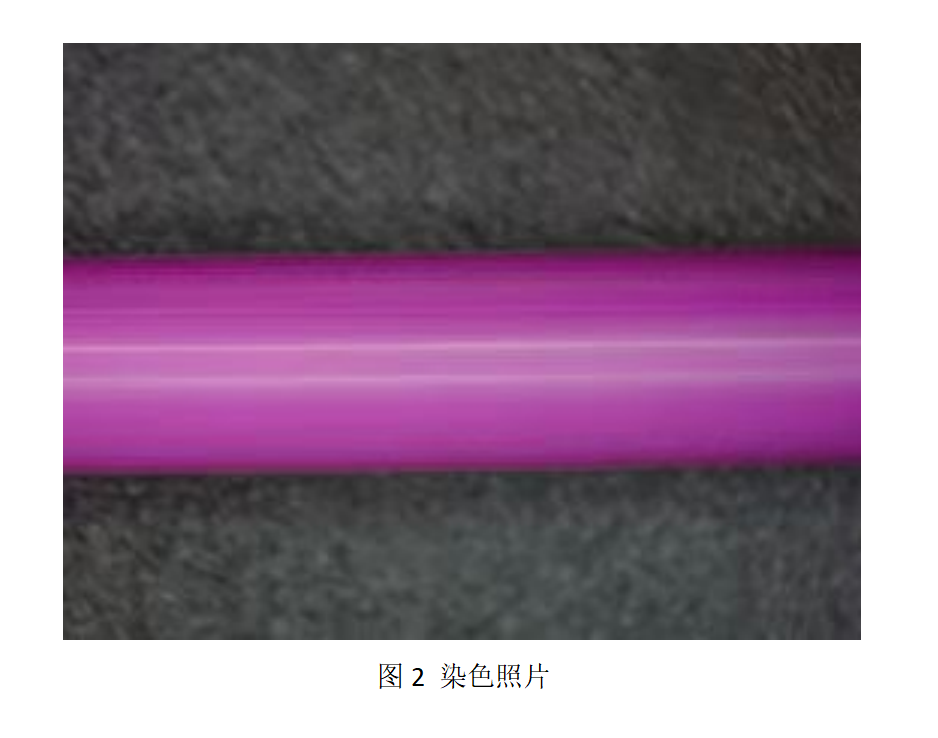
Choice of inspection methodAfter the sample is pre-processed, check whether the coating is damaged, peeled off and other defects, and can be observed with the naked eye, microscope or SEM. Start from one end of the sample and observe while rotating, record the defects of the coating, such as the size, number and location of the damage, and keep photos if necessary. Most hydrophilic lubricating coatings are transparent coatings. In order to visually and clearly identify the damage or peeling off of the coating, you can choose to observe it after dyeing. However, for some darker substrates, such as black or dark colors, dyeing cannot better identify the surface morphology of the coating, so you can also choose to observe without dyeing.
 'Project funded by the National Natural Science Foundation of China (22242012): Popular science on the application of surface modification technology of biomedical materials' series of popular science
About BaisaifeiJiangsu Baisaifei Biotechnology Co., Ltd. is located in Suzhou Industrial Park. Based on the founder's more than 20 years of professional accumulation in the field of biomaterial surface interfaces and domestic and foreign academic influence, it has created a technical service platform covering the entire industry chain of medical functional coatings. Baisaifei has developed multiple series of medical device functional coating products, automated coating equipment and coating testing instrument products with independent intellectual property rights and international competitiveness, applied for more than 200 patents, and led coating-related industry standards work. The domestic industry standard for the firmness of intravascular coatings drafted with the participation of Baisaifei will soon be released, and the two group standards that Baisaifei has participated in have been successfully established. Coating categories include hydrophilic lubricating coatings, anticoagulant coatings, hydrophilic lubricating antibacterial coatings, hydrophobic coatings, anti-crystallization coatings, anti-fouling coatings, drug-releasing coatings, etc. The cooperation model includes coating liquid sales, coating equipment and coating testing instrument sales, coating ODM, coating inspection and testing, and coating customized R&D services. At present, it has stable cooperation with hundreds of domestic and foreign medical device companies, among which coating equipment and high-capacity coating production lines are sold at home and abroad, covering neurological intervention, cardiovascular intervention, non-vascular intervention, drainage, intravascular implantation, extracorporeal life support and other fields. The series of coating products have FDA and NMPA master document filings, and have assisted customers in obtaining more than 100 NMPA, FDA, and CE medical device registration certificates.


