On July 18, 2023, the Medical Device Technical Review Center of the State Food and Drug Administration officially issued the 'Guiding Principles for Registration Review of Vascular Interventional Devices with Lubricating Coatings', which applies to vascular interventional devices with lubricating coatings, including intravascular catheters, guidewires and delivery systems. It is an evaluation principle for lubricating coatings and clarifies many unclear issues in the past.
The guideline states: 'Since immersion in environmental liquids and friction during use are the main factors leading to coating peeling, it is recommended to conduct simulation tests in a representative typical model and collect pre- and post-test data to evaluate the integrity of the coating. In addition to optical microscopy to detect that the coating surface is uniform, smooth, free of bubbles, burrs, and shedding, common evaluation methods should also evaluate coating integrity through dyeing testing, microscopic observation and other methods. The microscopic image should be clear and can show defects on the coating surface. The transparent coating can be dyed after the simulation test to facilitate observation.
The coating integrity test should evaluate the particles that may fall off during simulated use, that is, the collected particles should be quantified after simulated use, including particle size and number. The quantification method should be verified. '
The 'Coronary Artery, Peripheral Vascular and Neurovascular Guidewires - Performance Testing and Recommended Labeling Guidelines' released by the US FDA in October 2019 also recommended that the coating integrity evaluation should include testing the device in a vascular model that simulates clinical tortuousness, and explain the data collected before and after the test.
It can be seen from this that for the evaluation of coated intravascular product particles, it is recommended to simulate the clinical use evaluation of the product in a vascular model. However, the two guidance documents do not clearly explain how to collect the particles in a simulated physiological place. This also causes registration applicants to often get stuck when preparing registration application materials. It can be seen from this that for the evaluation of coated intravascular product particles, it is recommended to simulate the clinical use evaluation of the product in a vascular model. However, the two guidance documents do not clearly explain how to collect the particles in a simulated physiological place. This also causes registration applicants to often get stuck when preparing registration application materials.
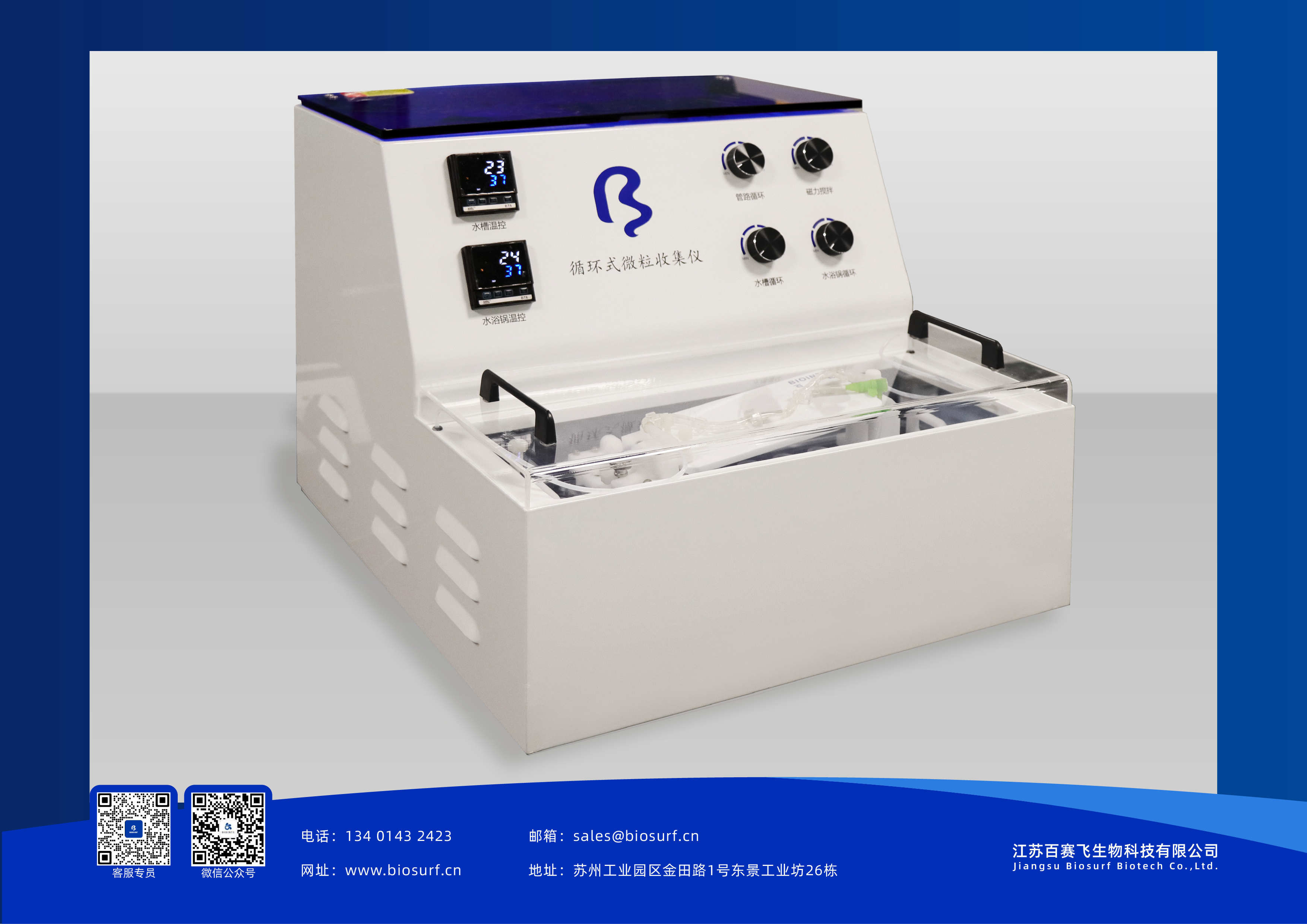
In order to solve the problem of collection methods, we have developed a particle collection system that is adapted to the corresponding blood vessel model and circulatory system, and is suitable for the collection of particle test solutions during simulated use of intravascular catheter and guidewire products. Users can switch between different models as needed to simulate different usage scenarios to collect particles. Simply activate the surface coating of the sample with experimental water, and insert, push and withdraw it several times in the appropriate model of the device. Then the test solution can be taken out for particle testing, thus greatly simplifying the particle collection process, reducing interference from external particles, and simulating corresponding clinical usage scenarios.